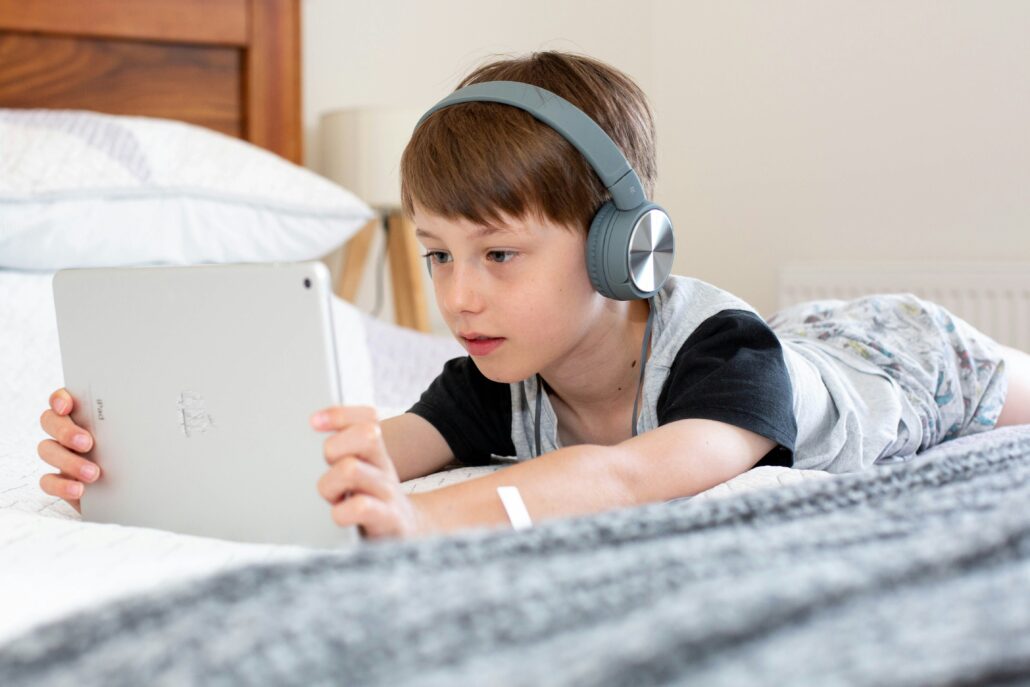
Digital Childhoods: How Screen Time Affects Language Development
We’ve all heard it: “It’s those screens!”
Screens are everywhere now — even toddlers and preschoolers spend time on phones, tablets, and TVs. But as speech and language therapists, parents, and professionals, we know the answer isn’t that simple. It’s not just about screens. It’s about how screens are used, and what else is happening around them.
Some recent reports, including a 2025 BBC report, have highlighted concerns about declining speech and language skills among preschoolers in the UK. Professionals interviewed suggested that screen time may be one contributing factor, alongside changes in opportunities for face-to-face interaction and play.
Children need real-world play and human interaction to develop strong communication skills. Heavy screen use can sometimes reduce opportunities for those rich, back-and-forth conversations that help children learn language naturally.
Not All Screen Time Is Bad
The Royal College of Speech and Language Therapists (RCSLT) reminds us that it’s not just about how long children spend on screens — it’s about what they are doing during that time.
In written evidence to the UK Parliament (2023), RCSLT noted:
Excessive or unsupervised screen time is associated with poorer language outcomes
Shared viewing and interaction are associated with more positive outcomes than passive viewing alone
Importantly, RCSLT does not say screens improve vocabulary on their own. Instead, the evidence keeps coming back to one thing: interaction matters most.
Quality Over Quantity (And Let’s Be Honest About Parent Life)
Watching videos alone isn’t ideal for language development, but sometimes it is just part of real life.
We’ve all been there — putting on a tablet for 10 minutes of quiet while we cook dinner, answer emails, or just take a breath… only to realise an hour has passed and the child doesn’t want to turn it off. And then the guilt shows up.
But here’s the reassuring part: language development isn’t about getting everything perfect. It’s about the overall pattern of connection throughout the day.
Small, realistic changes can help:
Give warnings before switching off screens
Finish episodes together
Set natural stopping points rather than sudden cut-offs
These small moments help children build healthier relationships with screens.
What Research Actually Shows About Language Learning
Research consistently shows that children learn vocabulary best through responsive, back-and-forth interaction.
When adults:
Talk with children
Ask questions
Explain new words
Link experiences to real life
children are more likely to learn and remember new language. So it’s not the screen itself that helps vocabulary growth. It’s the conversation around it.
Shared Viewing = Scaffolding Language
During shared viewing, parents and adults can “scaffold” language by:
Expanding on what children say
Introducing new words
Modelling sentence structure
Children tend to learn more when adults are actively involved rather than when they watch alone.
What Passive Screen Use Can Impact
Research suggests that high levels of passive screen use may be associated with:
Fewer opportunities for conversation
Smaller vocabulary growth compared to highly interactive environments
Difficulties with attention and listening when screen use is excessive
Screens don’t naturally provide the back-and-forth dialogue children need to practise conversation skills.
The reassuring news is that when screen time is balanced with play, conversation, and real-world experiences, children can still thrive in their language development.
Practical Tips: Supporting Language in a Digital World
Prioritise Real Conversations
Chat during everyday routines:
“What made you smile today?”
“Tell me about that picture!”
Use descriptive language:
“That duck is big and bright blue.”
“Your juice feels warm and sweet.”
These everyday moments build vocabulary naturally.
Make Screen Time Interactive
Watch together and talk about what you see:
“What do you think will happen next?”
“How do you think that character feels?”
Encourage children to explain what they think and see.
Encourage Storytelling and Role Play
After stories or videos:
Retell the story
Act it out
Create new endings
Role play supports vocabulary, sentence structure, and social communication skills.
Protect Family Connection Time
Screen-free mealtimes, bath time, or bedtime routines create natural spaces for conversation, singing, and games like I Spy.
Read Together Every Day
Reading naturally introduces new vocabulary and sentence structures. Pause to predict what might happen and talk about characters’ feelings and actions.
Use Everyday Moments for Learning
Language learning happens everywhere — at the shops, while cooking, or on walks. Talk about:
Colours
Numbers
Sounds, smells, and textures
Slowing down and talking makes everyday life a learning opportunity.
When to Seek Extra Support
Most children benefit from these strategies, but consider seeking advice if your child:
Uses very few words
Struggles to understand simple instructions
Is significantly behind developmental milestones
Early support from a Speech and Language Therapist can make a real difference.
Final Thoughts
Screens aren’t going away — and they don’t have to be the enemy of language development.
Research keeps pointing back to one simple truth: children learn language best through connection with people.
Rather than aiming for zero screen time, aim for intentional screen time. Focus less on minutes and more on meaningful interaction.
Connection — not perfection — supports children’s communication development.
If you’re concerned about your child’s communication skills, don’t hesitate to contact us at SpeechWise Therapy – we are here to help. Every child deserves the opportunity to communicate confidently and connect with the world around them.
Additional Websites/ references:
BBC News – Experts warn pre-school children’s screen time at ‘crisis point’
This article highlights concerns from professionals about rising screen time and its possible association with speech, language, and developmental outcomes in young children.
Royal College of Speech and Language Therapists (RCSLT) written evidence
Provides professional guidance on screen time and communication development. It emphasises that excessive or unsupervised screen use is associated with poorer language outcomes, while co-viewing and interaction are linked to more positive outcomes.
Zero to Three – Early Childhood Development and Screen Time
Provides recommendations on media use in early childhood and explains that
young children learn best through responsive, face-to-face interaction with caregivers.
Harvard University – Center on the Developing Child
Explains how early language development depends on rich, responsive, back-and-forth communication with adults and everyday conversational experiences.
JAMA Pediatrics – Screen Time and Developmental Outcomes (Madigan et al., 2020)
A large longitudinal study showing associations between higher early childhood screen time and lower developmental screening scores.
Written by Khadijah & Laura Mc

Author: Khadijah Akhtar
Speech & Language Therapist
Khadijah Akhtar is a dedicated Speech and Language Therapist based in Manchester, working primarily in mainstream primary schools across the region.

Author: Laura McCandless
Speech & Language Therapist
Laura is a Speech and Language Therapist with SpeechWise. She was inspired to enter the field after seeing the positive impact that speech and language therapy had on a close family member with Autism